
The ERP Rollout Strategy That Consistently Reduces Risk
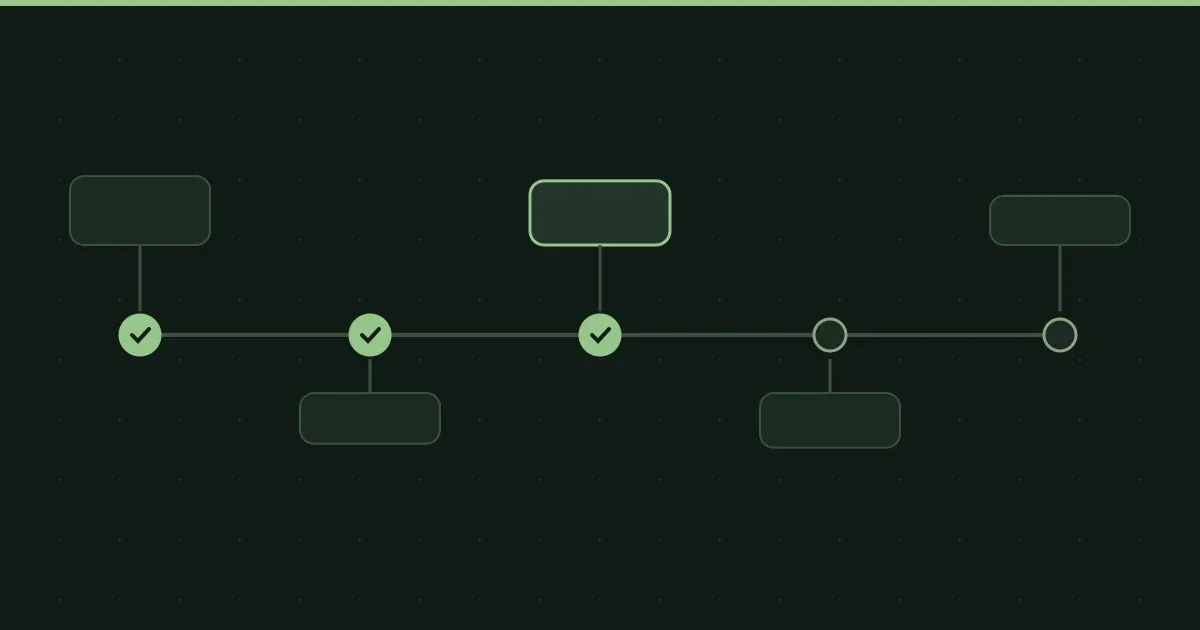
Every ERP project involves a choice that gets made early and almost never revisited: deploy everything at once or go in waves. After 100+ Odoo implementations across the US, Canada, and France, we have never once regretted recommending a phased erp rollout strategy. Big bang launches look faster on a Gantt chart. They rarely are. The seven reasons below explain why phased rollouts consistently deliver faster time-to-value, lower defect rates, and teams that actually use the system after go-live.
Each Wave Carries Real Business Accountability
When you go live in waves, every module launch is a discrete business event with a named owner. The AP manager owns Wave 1 Accounting go-live. The warehouse lead owns Wave 2 Inventory. Ownership is not shared across a 20-module cutover, it is specific, visible, and tied to a sprint retrospective. Business users stop being spectators and start being accountable. This single cultural shift is worth more than any technical risk mitigation. See the realistic Odoo timeline for typical wave durations.
Defects Surface in Week 2, Not Month 14
A big bang go-live hands the business 20 modules simultaneously. Defects compound: a misconfigured fiscal localization corrupts journal entries that feed the Analytic Accounting that feeds the project margin reports. In a phased rollout the Accounting module has been live for 90 days before Inventory touches it. Defects are isolated, smaller, and fixed while business impact is still contained. Defect detection after a phased go-live typically runs 40 to 60% lower than after equivalent big bang scopes we have seen in the field.
Training Load Matches Human Bandwidth
Asking 80 users to learn a new ERP in two weeks is asking them to do their job badly for those two weeks. Phased rollouts train 15 users on Accounting in Week 1, then 20 users on Inventory in Week 6, then the operations team on Manufacturing in Week 14. Each cohort absorbs the system before the next wave starts. Power users become internal trainers. Adoption rates, the number that determines whether the ERP stays used, are consistently higher with this structure. The ERP implementation FAQ covers training expectations in more detail.
Data Migration Risk Is Sliced Into Manageable Chunks
Migrating eight years of Purchase history, open AR, fixed-asset records, and multi-warehouse stock positions in a single weekend is one of the riskiest operations in enterprise IT. A phased migration cuts that risk into isolated loads: customer and vendor master in Wave 1, open AR/AP in Wave 2, inventory balances in Wave 3. Each load is validated against the source before the next one starts. Rollback scope stays narrow. A failed big bang data migration has no clean rollback path, the business has been running on the new system for a week before anyone realizes the opening balance is wrong.
Change Management Budget Stretches Further
Change management is usually the first line item cut when an ERP project runs over budget. In a big bang, that cut is catastrophic, there is no second chance at user adoption. In a phased rollout, change management cost is distributed across waves. The first wave teaches the team how to run change management effectively. Each subsequent wave benefits from lessons learned, internal champions built in prior waves, and a playbook that exists because you ran it before. The result is a lower per-module change management investment at each successive wave. See also 7 warning signs an Odoo implementation is headed for failure.
Integration Complexity Is Sequenced, Not Simultaneous
Most mid-market companies connect their ERP to at least one external system, a 3PL WMS, an eCommerce platform, a payroll bureau, a banking feed. In a big bang deployment, all integrations must be production-ready on Day 1. In a phased rollout, the Accounting bank feed goes live in Wave 1, the eCommerce connector goes live in Wave 2, and the 3PL API in Wave 3. Each integration is tested against a live system, not a UAT environment. The defect rate on integrations that go live sequentially against production data is dramatically lower than integrations that go live simultaneously against a single-weekend cutover.
Executive Confidence Compounds With Each Wave
The CFO who signed off on the ERP budget needs visible proof that the investment is working. A phased rollout delivers proof every 6 to 10 weeks: AP automation is live and the clerk is doing exception handling instead of data entry; the warehouse team scanned 400 picks today without a paper ticket; the sales team closed three orders from the CRM pipeline without a spreadsheet. By the time the final wave lands, the executive team is already convinced. In a big bang, the proof-of-value moment is pushed to the end of the project, when budget fatigue, team exhaustion, and political risk are all at their peak. The first 90 days after go-live covers how to sustain that momentum.
How to Evaluate an ERP Partner's Rollout Methodology Without Getting Burned
A phased rollout only works if the partner running it has a real methodology. Six questions that separate disciplined execution from slide-deck promises:
- Wave definition in writing. Ask for the wave plan before you sign. If they cannot produce one, the methodology does not exist.
- Fixed-price per wave, not time-and-materials total. T&M on a phased project gives you no visibility into remaining cost until the final invoice arrives.
- Named senior architect on your project. Octura assigns a senior Odoo architect to every engagement, the person who scopes is the person who builds.
- Hyper-care plan per wave. What does the first 30 days post-go-live look like? Who is on call? At what response SLA?
- Rollback criteria documented. Under what conditions would you delay a wave? This answer reveals whether the partner has done this before.
- Reference customer on a completed final wave. Not just Wave 1 go-live, the whole project, fully delivered.
- No offshore handoff. Ask who writes your code and where they are. "Our senior team scopes, offshore delivers" is not a phased methodology; it is a risk transfer.
See why standard Odoo configuration scales better than custom code for a related partner-selection lens.
Frequently Asked Questions
The questions readers ask us most often on this topic.
What is a phased ERP rollout strategy?
A phased rollout deploys ERP modules in sequential waves rather than all at once. Each wave covers a defined set of business processes, goes live, stabilizes, and hands off to the next wave. This approach isolates defects, distributes training load, and delivers measurable ROI before the full project completes.
Is a big bang ERP launch ever the right choice?
In very narrow circumstances, a company with fewer than 15 users, a single business process, and zero legacy integrations, a big bang can work. For any mid-market business with multiple departments, historical data to migrate, and external integrations, phased is almost always lower risk and lower total cost.
How long does a phased Odoo rollout typically take?
A typical North American mid-market implementation runs 18 to 28 weeks across two or three waves. Wave 1 (Accounting, Sales, Purchasing) usually takes 8 to 10 weeks. Wave 2 (Inventory, Manufacturing) adds 8 to 12 weeks. A third wave for HR, Payroll, or custom modules adds 6 to 10 weeks. Fixed-price scoping sets these timelines before work begins.
What goes into Wave 1 of an Odoo implementation?
Wave 1 almost always includes Accounting, Sales, Purchasing, and Contacts, the financial and commercial core that every other module depends on. Getting the chart of accounts, tax configuration, payment terms, and vendor/customer master right in Wave 1 removes the foundation risk for every subsequent wave.
How do phased rollouts reduce ERP implementation risk?
By narrowing the blast radius at each go-live. A single-module go-live has a defined scope for defect detection, a named business owner, and a rollback window. A big bang cutover compounds every module's defects simultaneously, eliminates rollback as a practical option, and overwhelms the support team.
What is the difference between phased Odoo rollout and iterative development?
Phased rollout is a deployment strategy, modules go live in waves, each fully configured and tested before production use. Iterative development is a build methodology, features are built in sprints. You can combine both: build iteratively within each wave, then deploy each wave on a fixed go-live date.
How does Octura structure a phased Odoo implementation?
Octura runs a fixed-price discovery before any wave begins. The discovery defines wave scope, dependencies, data migration plan, and integration sequencing. Each wave has a fixed price, a named senior architect, a UAT checklist, and a 30-day hyper-care period. No offshore handoff at any stage.
What happens to data migration in a phased Odoo rollout?
Data migration is sliced by wave. Wave 1 migrates chart of accounts, customers, vendors, and open AR/AP. Wave 2 migrates inventory master and opening balances. Wave 3 migrates historical transactions as needed. Each migration load is validated against the source system before the next wave starts, keeping rollback scope narrow.
Can integrations be added in later waves of an Odoo rollout?
Yes, and this is a major advantage of phased deployment. Wave 1 launches with the banking feed and basic eCommerce sync. Wave 2 adds the 3PL WMS connector. Each integration is tested against production data rather than a sandbox, which significantly reduces defect rates compared to big bang integration launches.
How does a phased Odoo rollout affect employee training?
Training is delivered in cohorts matching each wave. Wave 1 trains 10 to 20 finance and sales staff. Wave 2 trains warehouse and purchasing staff. Each group absorbs the system before the next wave starts. Power users from early waves become internal trainers for later waves, reducing external training cost as the project progresses.
What is the cost difference between phased and big bang Odoo implementations?
Upfront cost is similar. Total cost of ownership favors phased implementations because defect remediation, post-go-live consulting, and retraining costs are significantly lower. Big bang projects frequently run 20 to 40% over budget on post-go-live support. Phased projects with fixed-price waves deliver more predictable total cost.
How do you know which modules to include in each phase?
Dependencies drive sequencing. Accounting must go live before Inventory (for valuation) and before Manufacturing (for costing). Sales and Purchasing go live before or alongside Accounting. Inventory goes live before Manufacturing. HR and Payroll are usually the final wave. A competent partner documents these dependencies in discovery before any build starts.